


Hall Effect vs Potentiometer Joysticks
As the need for joysticks increases designers are undergoing greater pressure to achieve use requirements while also cutting down cost. These requirements include but are not limited to sensitivity, accuracy, low power, smoother operation, custom install size, and multi-function features. It is particularly important in industrial environments where proper control of heavy equipment is critical to prevent work related injuries or loss of productivity.
CGEC has custom developed several types of industrial electric joysticks to serve Original Equipment Manufacturers (OEMs) and operators across industrial, commercial, and consumer environments. When focusing on industrial applications, joysticks for machines and equipment play a crucial role. For this reason, it’s important to be familiar with two of the leading types of industrial joysticks: hall effect joysticks and potentiometer joysticks.
Key Considerations for Industrial Electric Joysticks
There are advantages and disadvantages to all types of joysticks. It is important to be aware of the underlying dynamics of both potentiometer and hall effect based joysticks to select the one that is suitable for your specific application.
Hall type handle features:
● Hall non-contact angle detection
● long lasting
● High pollution resistance
● The trend in future


Potentiometer type handle features:
● Passive components
● Strong anti-interference ability
● Large voltage range
● Low power consumption


Forklift joystick operator
A potentiometer is a variable resistor which uses a physical wiper arm that slides across the internal electrical element to change the resistance. Potentiometers are traditionally used as analog voltage dividers that provide voltage output signals and are manufactured using one of several electrical element types: carbon, cermet, wire wound or conductive plastic. Each one of these choices have their benefits and drawbacks however all are susceptible to the eventual wear and tear caused by the sliding friction of the wiper arm as the potentiometer shaft is rotated. Cermet and carbon type potentiometers are not often used in joystick applications as they are lower in life and best used in low cycle operations such as panel setting functions.
So CGEC offer three series potentiometer joysticks HJ12, HJ15, HJ18 used on forklift control.


Hall effect industrial electric joysticks according to the principle of Hall effect, the displacement signal transmitted by the hand is converted into the change of the gradient magnetic field between the Hall element and the permanent magnet steel, and the electrical signal is output.. Based on the change in magnetic field, the hall effect sensor acts just like a potentiometer but eliminates the degradation of the element because there is no need for a physical wiper arm. A magnet coupled internally to the end of the shaft is placed in close proximity to the hall effect chip, but never makes contact. While hall effect joysticks can add longevity, other factors need to be considered such as temperature drift or available supply voltage.
Potentiometer Joysticks
The people's habitual operation mode is converted into the sliding state of the potentiometer through a certain mechanical structure (handle structure), and the displacement signal is converted into an electrical signal output through the potentiometer.Industrial electric potentiometer joysticks have been around for decades and use the principles of Ohm’s Law to provide a proportional analog output. The potentiometer joystick contains several components that, when moved, increase or decrease the level of resistance within the electronic circuit. Most all data acquisition units, PLCs or microcontrollers are compatible with the ubiquitous nature of the traditional potentiometer.

An electric industrial potentiometer joystick is an ideal option for applications that require precise movement of industrial equipment or moving machinery. While potentiometer joysticks offer great performance, they do have limitations when it comes to durability. In terms of long-term durability, these types of joysticks may undergo reliability issues due to the wearing of moving parts and minor susceptibility to electromagnetic interference or radio frequency interference. This is especially true for wire wound potentiometers but less so for conductive plastic types which use a smooth electrical track to eliminate as much friction as possible. Likewise, conductive plastic potentiometers do not have the same issues with interference because of the element’s material properties.
Hall Effect Joysticks
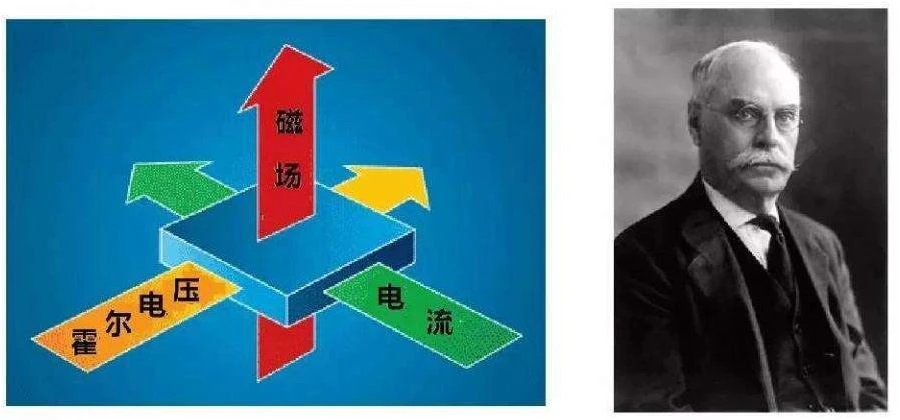
In contrast to potentiometer joysticks which leverage electronic circuits, hall effect joysticks use a magnetic system. Hall effect joysticks have an advantage over potentiometer joysticks because there is no wear from physical contact with the sensor itself. Hall effect electric joysticks are used for industrial applications in the same way as potentiometer types, but excel in those which may have excessive vibration or shock. These applications include mining trucks, backhoe loaders, cranes, excavators, diggers, and more.

While there are several advantages from using hall effect joysticks over potentiometer joysticks, there are also several disadvantages. Available voltage supply may be a limiting factor as most hall effects require 5VDC or 9~36VDC whereas a potentiometer can use a wide range of voltages. In addition, there are a few limitations that hall effect joysticks have in the ferromagnetic material that is used, as its magnetic field will change over time and is directly affected by more extreme hot and cold temperatures. These variances in the magnetic field will cause the hall effect joystick to "drift” and affect the output voltage. This creates unwanted variances and impacts the long term reliability of the hall effect joystick.
Actually CGEC offers hall effect and potentiometer output in one series joystick, such HJ20, HJ30, HJ50, HJ60 series.


Choosing the Right Joystick: Hall Effect vs Potentiometer
When it comes to selecting an industrial electric joystick controller, there are a few questions you should be asking. The following questions are designed to help from both an operational performance and budgetary standpoint.


